If you’ve spent any time in a city, you probably know that urban life brings its own mix of comfort and unpredictability. While most days go smoothly, unexpected situations can pop up, like power outages, water main breaks, or even big weather events. That’s where urban survival and preparedness jump in. For me, getting prepared started out as something I did “just in case.” But after a few surprises, I realized it’s actually pretty smart for anyone living in a city. Here’s my breakdown on what urban survival and preparedness mean, why it matters, and how to get started even if you’re new to the whole idea.
What Is Urban Survival and Preparedness?
Urban survival and preparedness is about knowing how to get through challenges that pop up in city life. This can mean something as simple as a food delivery delay or as serious as public transportation grinding to a halt because of an emergency. The goal isn’t about being scared or expecting the worst; it’s about being ready for whatever comes your way.
The big difference between urban survival and classic “wilderness survival” is the environment. Instead of forests, rivers, and mountains, you’re dealing with concrete, buildings, big crowds, and sometimes limited resources like clean water or electricity. Urban preparedness means thinking ahead about the unique challenges that show up in metro areas, and having the right mix of supplies, knowledge, and plans to stay comfortable and safe.
Why Preparedness Matters for City Dwellers
Cities are built for convenience, but things can change quickly if there’s a major disruption. When the unexpected happens, city living can turn tricky fast. Here’s why being prepared is really important if city life is your thing:
- Population Density: With so many people packed in, resources like food, water, and fuel can run out quicker during emergencies.
- Relying on Infrastructure: Cities are designed around public transport, electricity, and tap water. Any disruption here can make basic tasks challenging.
- Limited Outdoor Space: Unlike rural areas, most city folks don’t have a backyard for a garden or extra storage, so you must be creative with what you keep on hand.
- Faster Spread of Information, and Panic: News spreads lightning fast, but so can rumors and fear. A good plan keeps you focused on what matters.
For me, I realized how vulnerable my daily routine was after a long blackout one summer. I didn’t have enough bottled water or batteries, and after the stores sold out, I promised myself I’d never get caught off guard again.
Basic Concepts Every Urban Prepper Should Know
Getting prepared doesn’t require a bunker in your basement or a year’s supply of freezedried food. These basics will cover you in most urban situations:
- Situational Awareness: Keep your head on a swivel and pay attention to news, alerts, and what’s happening in your neighborhood. Apps for local news or weather warnings are pretty handy.
- Shelter and Comfort: Know how to stay comfortable if your apartment or home loses power or heating. This could mean having warm clothing, blankets, or a solarpowered light.
- Water Storage: Experts usually recommend a gallon per person per day for drinking and cooking. I keep a few gallons tucked behind my sofa, out of sight but ready to grab.
- Emergency Food: Nonperishable food, think canned goods, protein bars, or dried fruits, takes up little space but gives you calories if you’re stuck inside or the stores are cleaned out.
- First Aid and Medications: Have a basic kit with essentials, plus at least a week’s supply of any prescription meds you need.
If you ever wondered how to start, just focus on these basics and tailor them to your daily needs. Building at your own pace is key.
Building Your Urban Emergency Kit
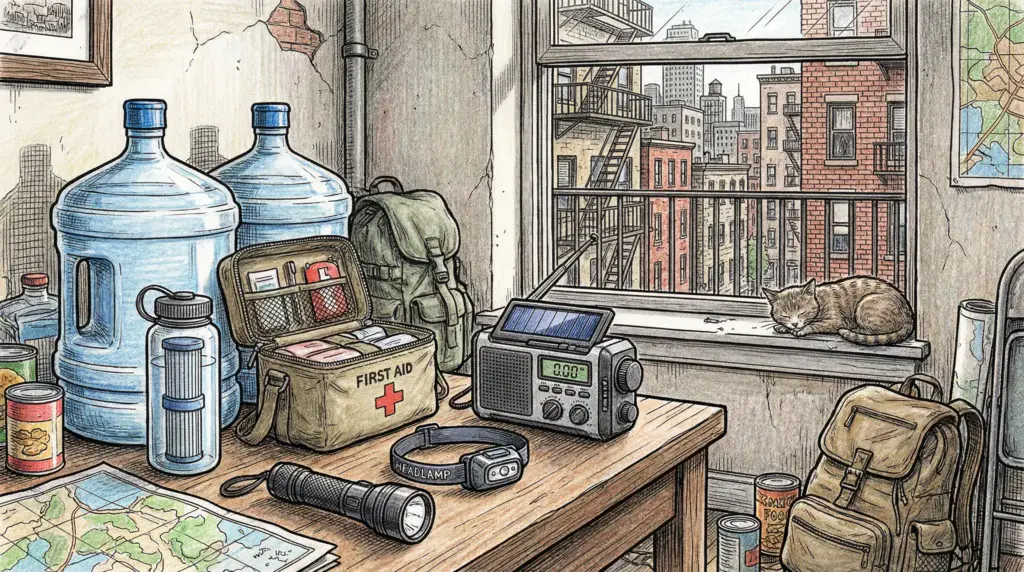
Your emergency kit should fit your space, budget, and needs. Here are items I keep in my kit, and why each is worth the space:
- Flashlights (with extra batteries): A headlamp is even better for handsfree lighting.
- Portable phone charger: Super useful if the power is out but you still have cell service.
- Batterypowered or handcrank radio: When the internet goes down, these can keep you in the know.
- Multitool: Fixes, tweaks, and even a quick can opener if you need it.
- Face masks and gloves: Helpful during a fire, dust storm, or unexpected event requiring protection.
- Copies of important documents: Digital or physical copies, depending on what’s easier to grab in a hurry.
For apartment dwellers with limited storage, packing these items into a sturdy backpack or tote by your front door keeps things tidy and easy to grab if you need to leave fast. If you want to be extra organized, label items so they’re easy to spot, especially in a power outage.
Key Skills for Urban Survival
Having gear is one part, but knowing how to use it makes all the difference. Here are a few skills every urban prepper benefits from:
- Basic First Aid: Being able to patch a cut or treat a burn is a huge advantage until professionals arrive.
- Finding Your Way Without GPS: Learn your area’s main streets, landmarks, and alternate routes home in case your phone dies or signals go out.
- Fire Safety: Know how to use a fire extinguisher and what exit routes are available in your building. Practice finding these in the dark for extra confidence.
- Staying Calm: Take a few deep breaths and think before reacting. It sounds simple, but keeping cool is super important in a pinch.
Another tip—regularly check your gear and try using it when things are calm. The more comfortable you are with your kit, the less you’ll need to think things through in an actual emergency.
Being Prepared as a Community
One person prepared is good, but a few neighbors working together really tips the scale. Building connections in your building or on your floor can make emergencies feel a lot less lonely. Here’s how community helps in urban survival:
- Sharing Resources: If you’ve stocked up on water and your neighbor has a camping stove, pooling supplies helps both of you out.
- Skill Sharing: Someone may have medical training, while someone else might know how to fix plumbing or electrical issues. A group is stronger than going solo.
- Communication: Setting up a buildingwide group chat or phone tree keeps everyone informed and prevents rumors from taking over.
I’ve seen firsthand how neighbors looking out for each other during a power outage made things less chaotic. Small gestures like sharing spare batteries or lending a flashlight can have a big impact. Even organizing a quick building check-in can matter—sometimes just knowing you’re not alone goes a long way.
Challenges Unique to Urban Preparedness
Cities come with a few quirks you learn to work around. I’ve run into these myself and heard about more from fellow city preppers:
- Space Limitations: Apartments don’t leave much room for big stockpiles. Focus on compact, multiuse items, and look for hidden storage spots, such as under the bed or at the back of your closet.
- Building Regulations: Some buildings don’t allow certain items like gas canisters or big generators because of safety codes. Check your building’s rules before stocking up.
- Dependence on Elevators: Highrises mean you may be stuck walking lots of stairs if the power is out, so keep your gobag light enough to carry comfortably.
Water Storage and Purity
Straight tap water might not be available in some emergencies, and urban plumbing can take a while to restore. Compact water filters or purification tablets take up little space and provide good backup. It’s worth having a few options, not just bottled water. I like to keep a small gravity-fed filter on hand for both convenience and peace of mind.
Communication and Information
Cities get noisy and crowded during emergencies. Power outages and jammed cell networks are common, but simple twoway radios or preplanned meetup spots with friends help reduce confusion. Having backup ways to get information is really important, so jot down local radio frequencies and keep a list of nearby shelters handy.
Advanced Tips for Urban Survival Pros
If you’re feeling comfortable with the basics, taking things up a notch with these habits makes you even more adapted to city disruptions:
Rotate Supplies: Every six months, swap out food, water, and batteries so they’re always fresh and ready.
Tailor Kits for the Season: Add hand warmers in winter or sunscreen and hats for summer emergencies. Update your kit to include things you’d really need for the time of year.
Stay Informed: Subscribe to local emergency alert systems and learn how to shut off utilities like gas or water safely in your building. Many cities have official apps for this purpose—check them out and sign up ahead of time.
Keep Cash Handy: During a big blackout or network issue, ATMs and card readers can go down, so small bills tucked in your kit can make a difference when buying essentials or catching a ride.
Also, run practice drills, like walking your evacuation route or using your kit’s radio, at least once or twice a year. That extra practice helps you stay sharp and ready for anything.
Common Urban Survival Questions
Here are a few questions I get whenever someone finds out I keep an emergency kit under my bed:
Q: Do I really need to be prepared if I live in a city?
A: It definitely helps, even for minor annoyances like elevator outages or citywide events. Having a plan saves a lot of stress and makes unexpected moments feel less overwhelming.
Q: How much food and water should I keep in a small apartment?
A: Start with three days’ worth for each person, more if you can fit it. Go for compact, caloriedense options and tuck water in unused corners. Rotate these regularly to keep everything fresh.
Q: What if I don’t have room for lots of gear?
A: Focus on the true necessities and look for gear that pulls double duty. Even a simple first aid kit, flashlight, and some bottles of water make a difference. Use nooks and crannies—behind furniture or at the bottom of closets are great storage spots.
Planning for urban emergencies isn’t about being pessimistic. It’s just a thoughtful way to keep your daily routine steady even when the city throws a curveball. I find having a kit and a plan gives me peace of mind, and it’s one less thing to worry about when things get weird.